



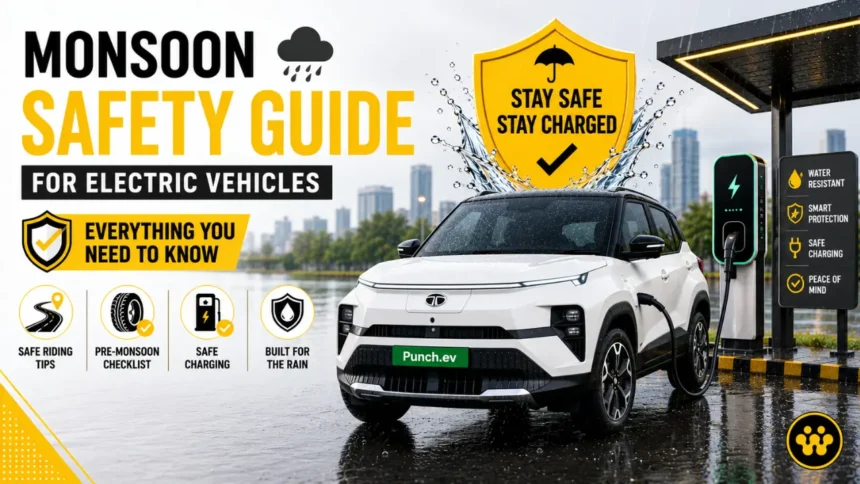
The Indian monsoon season is a time of lush transformation, turning our cityscapes into vibrant, rain-washed landscapes. But for the growing community of electric vehicle (EV) owners, the heavy downpour brings a unique set of questions. Is it safe to drive through waterlogged streets? How should I handle charging when it’s storming? Are my tires ready for slick asphalt?
Modern electric vehicles are engineering marvels. With advanced Ingress Protection (IP67) ratings and sophisticated electrical monitoring systems, they are built to endure the elements. However, “water-resistant” does not mean “invincible.” As an EV owner, your proactive approach—blending technical knowledge with cautious riding habits—is the difference between a seamless commute and a breakdown.
In this guide, we dive deep into the essential monsoon care protocols, providing a roadmap to ensure your EV stays safe, efficient, and road-ready throughout the wet season.
The “Mental Map” Approach: Scanning Your Route for Safety
Before you even turn the throttle or press the accelerator, you need to cultivate a defensive riding mindset. Experienced riders don’t just react to the road; they anticipate it. We call this the “Mental Map.”
Monsoon riding is not about speed; it is about spatial awareness. As you head out, you must constantly visualize the road surface ahead. You aren’t just looking for traffic; you are looking for hidden hazards.