


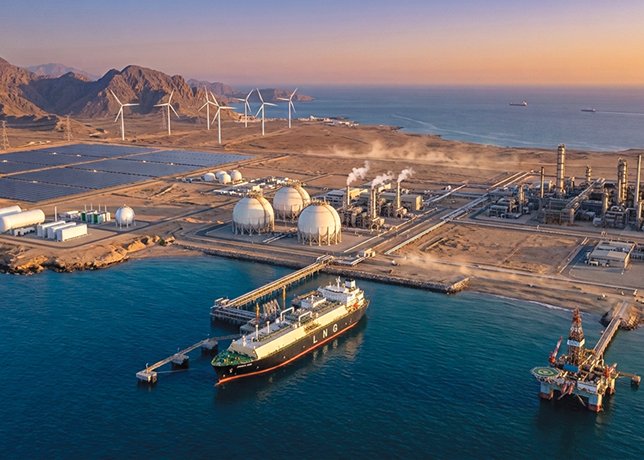
Oman is executing a comprehensive, dual-track structural transformation of its public energy architecture, deliberately balancing the capital-intensive lifecycle extension of mature hydrocarbon reservoirs with a state-mandated acceleration into low-carbon infrastructure.
Under the strategic framework of Oman Vision 2040, the state is aggressively pursuing economic diversification while systematically unbundling and optimising its massive national oil companies (NOCs) to insulate public finances from global commodity volatility.
Rather than relying on direct state subsidies, the Sultunate has established independent holding entities designed to command distinct balance sheets, access international debt capital markets autonomously, and drive structural efficiency across the entire energy value chain.
This institutional shift is reconfiguring the traditional relationships between state-backed heavyweights, global corporate joint-venture partners, and global financial markets as the nation navigates a shifting global landscape.

CAPITAL RECLASSIFICATION & UPSTREAM OPTIMISATION
According to Energy Development Oman’s (EDO) financial statement for the year ended December 31, 2025, significant milestones have been achieved in balance sheet rationalisation despite facing a compressed global pricing environment.
EDO reported revenues of $14.77 billion for 2025, a decrease from the $16.07 billion earned in 2024.

The net profit earned was $523 million due to a highly substantial cost profile dominated by $5.2 billion in royalty expenses alongside $4.12 billion in rising depreciation, depletion, and amortisation charges.
However, the corporate entity dramatically fortified its core balance sheet resilience, expanding its total equity base to $11.63 billion, up from $10.20 billion in 2024.
EDO commands the absolute cornerstone of the conventional energy economy of the Sultanate, holding the 60 per cent state participating interest in Block 6, an expansive hydrocarbon concession covering approximately 90,000 sq km.
This asset block represents approximately 55 per cent of the total oil and condensate reserves of Oman and yields three-quarters of its aggregate hydrocarbon production.
The operational execution of this concession remains under the stewardship of Petroleum Development Oman (PDO), which functions as a premier exploration and production joint venture between the Government of Oman holding 60 per cent, Shell holding 34 per cent, TotalEnergies holding 4 per cent, and PTTEP holding 2 per cent.
To control escalating operating expenses, which included production expenses rising to $1.27 billion, PDO is deploying advanced automated well-management digital ecosystems across its fields.