


The Enduring Fallout: Joachim Boldt’s Research Misconduct Continues to Unravel a Decade Later
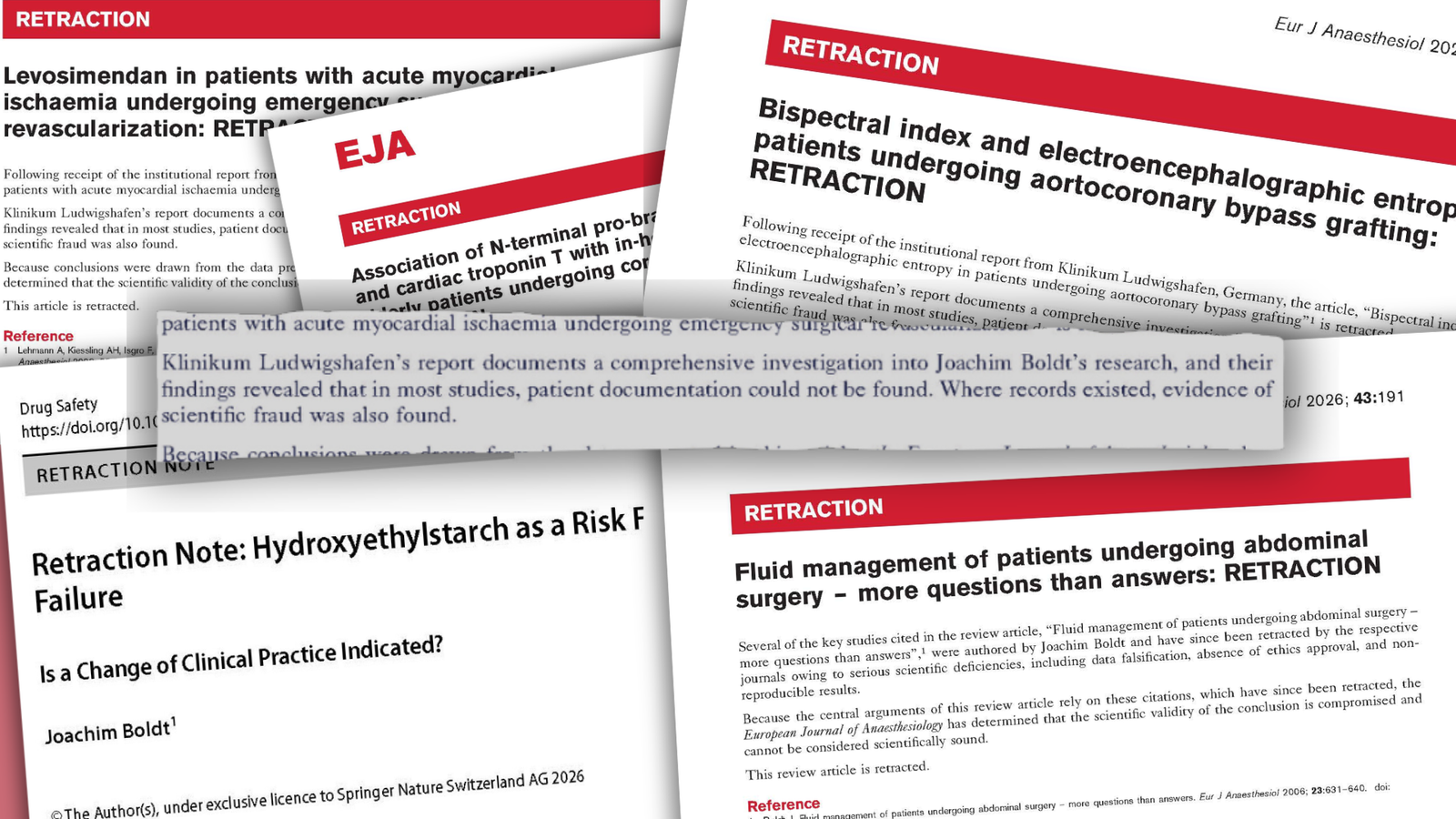
More than ten years after the initial shockwaves, the scientific community continues to grapple with the extensive research misconduct attributed to German anaesthesiologist Joachim Boldt. Journals are still actively retracting his papers, underscoring the deep and prolonged impact of one of the largest scandals in modern medical publishing.
The sheer scale of “The Boldt debacle,” as Martin Tramèr, former editor-in-chief of the European Journal of Anaesthesiology, once termed it, broke into public consciousness in 2010. What began as an investigation into a few questionable studies quickly escalated, revealing hundreds of publications tainted by fabricated data and ethical breaches.
The Long Shadow of Deception
The fact that retractions persist over a decade later speaks volumes about the complexity and laborious nature of cleaning up compromised scientific literature. Each retraction requires meticulous investigation, often involving multiple institutions and editors poring over old data and ethical approvals.
Boldt’s misconduct primarily involved studies in anaesthesiology, particularly those related to volume therapy and colloids. His prolific output, once highly cited, is now systematically dismantled, paper by paper, as evidence of fraud comes to light or is confirmed.
Impact on Scientific Integrity and Trust
This prolonged saga serves as a stark reminder of the vulnerabilities within the peer review and publication system. The trust placed in published research is paramount for medical advancements and patient care. When that trust is betrayed on such a massive scale, the repercussions are felt across the entire scientific landscape, challenging fundamental principles of scientific integrity.
More Read

For journals like the European Journal of Anaesthesiology, the task has been immense. Editors and review boards have dedicated significant resources to identify, review, and retract the fraudulent works, a process that is both costly and time-consuming. Their continued efforts highlight a commitment to maintaining academic ethics and the integrity of the scientific record.
Lessons Learned and Future Vigilance
The ongoing retraction of Joachim Boldt’s papers reinforces the critical need for robust ethical oversight in research. It emphasizes the importance of data transparency, rigorous peer review, and the responsibility of institutions to investigate allegations of misconduct thoroughly and swiftly.
While the full extent of the damage caused by Boldt’s actions may never be entirely quantified, the persistent efforts to correct the scientific record ensure that future research builds upon a foundation of genuine discovery, rather than fabricated claims. The scientific community remains vigilant, learning from past failures to safeguard the future of research integrity.